
Over the summer, students of the TU Delft Faculty of Architecture created an urban open space art installation. In the autumn, the installation embarked on its maiden voyage across the country to foster reading culture and new ways of thinking on the current challenges faced by Europe and the wider world.
Europe Readr Kick-off event in OBA Amsterdam
On 22 September 2021, Slovenian ambassador to the Netherlands Sanja Štiglic and President of EUNIC Netherlands Daria Bouwman officially opened the Europe Readr reading pavilion designed by the students of the Faculty of Architecture and the Built Environment TU Delft in OBA Amsterdam.


Ambassador Štiglic thanked the students and mentors for their remarkable art installation, which will adorn OBA until 4 October, then travel to the North, and finally to Delft, thus spreading Europe Readr's message “Open a book for a better future” all over the Netherlands.
The launch was followed by a very intriguing and entertaining talk show on #TheFutureOfLiving, the future of Europe and the world we want to live in, with exceptional international speakers: sustainability expert, speaker, presenter, writer and consultant Marieke Eyskoot, Czech writer and Europe Readr author Marek Šindelka, Slovenian writer and Europe Readr author Drago Jančar, and Full Professor at TU Delft Georg Vrachliotis. The talk show was moderated by Rogier Elshout.
Reading pavilion arrives at Emmen
On 7 October, the Europe Reader reading pavilion arrived at the Emmen library – the second stop on its journey across the Netherlands. Representatives of project partners – Marko Štucin, Slovenian Embassy in the Netherlands, Daria Bouwman, President of EUNIC Netherlands, Nicole Stiekema, Director of Bibliotheek Emmen, Rineke Marwitz, Director of De Kunstbeweging, and the guest of honour Eric van Oosterhout, Mayor of the Municipality of Emmen – in their speeches underscored the importance of the Europe Readr message. The pavilion will adorn the Emmen library until the end of October.


The programme continued with an online presentation delivered by the creators of the Europe Readr pavilion and the opening of the exhibition ‘Poetry Images’ showcasing works by the Hungarian Europe Readr author/illustrator Kinga Rofusz and other Hungarian illustrators of children’s books.
Pavilion in Veendam library
On 4 November 2021 the pavilion arrived at Veendam, where it will adorn Bibliotheek Veendam until the end of November and then continue its journey to Delft. On this occasion EUNIC Netherlands kindly donated some of the children's books from our collection to the library.


Making of the pavilion
Special thanks to the creators of the Europe Readr pavilion - students of the TU Delft Faculty of Architecture and the Built Environment: Christopher Bierach, Dimitris Ntoupas, Tim Schumann & Thomas Lindemann.
More info about the project and partners in the Netherlands: EUNIC Netherlands.
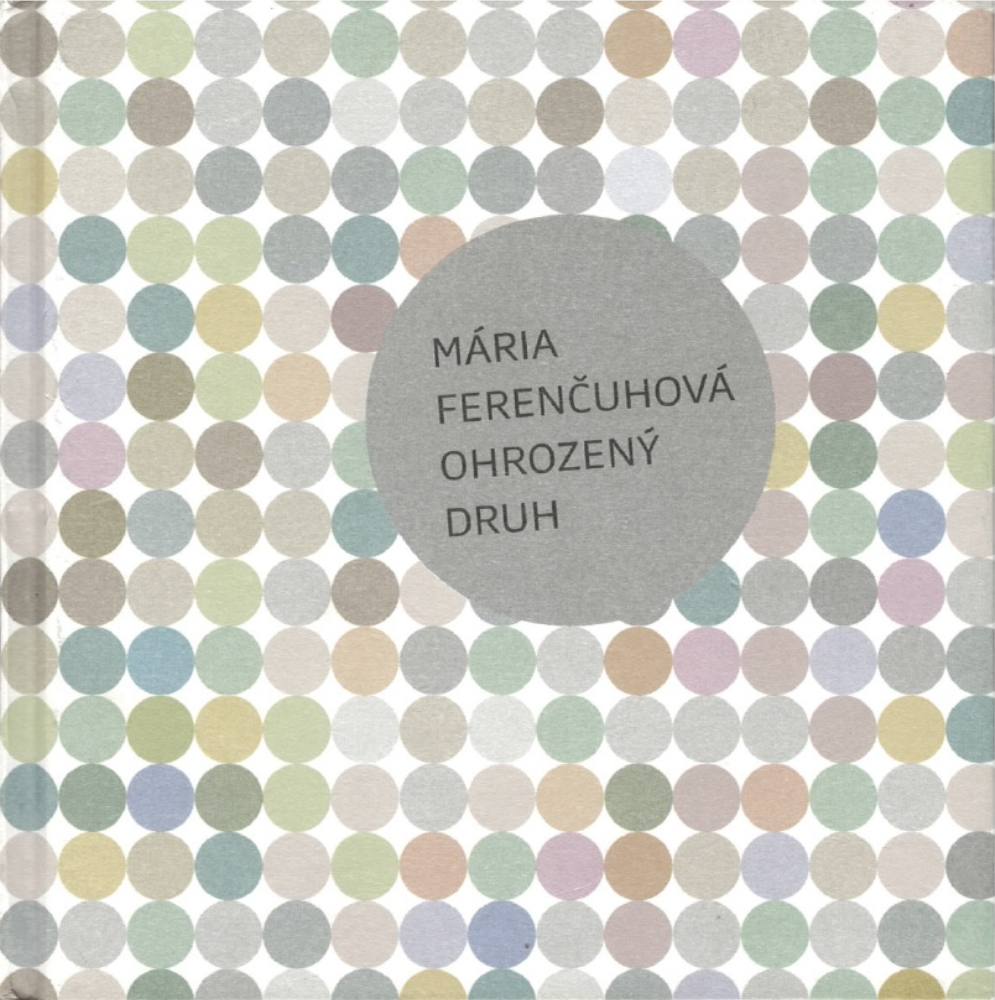
The poet and critic Ján Gavura has coined the phrase “oko kameramanky” (camerawoman’s eye), referring to her work as a lecturer on film. This is slightly misleading for Anglophone readers for whom Isherwood’s “I am a camera” belongs to another era of realism in writing. Mária is not a realist in that sense at all. Certainly there is an ability to switch visual perspectives in the space of a single poem, to zoom in and out. In “Threatened Species,” the sequence opens with a view from space: “The view from above doesn’t belong to a god / but a satellite”; but by section ten we have a microscopic viewpoint: “we examine the skin on faces, / maps of blood vessels, craters for cells.” There is also a merging of the self with the environment; human beings in Mária’s poems are also animals and not separated from the environment. Often in her poetry the body becomes both exterior and interior landscape, a juxtaposition of macroscopic and microscopic vision akin to the hermetic doctrine of “as above, so below.” I read Mária’s poetry with same excitement that I first read the English Metaphysicals many years ago.