
The UTADEO Faculty of Design and the FUGA Foundation have created a large structure resembling book pages and featuring the covers of 27 books from the Europe Readr collection for the urban art intervention. The public presentation of the intervention was followed by a discussion on the future of publishing, literature and reading.
Launch of the urban intervention
The main structure of the Europe Readr project in Colombia was revealed to the public on 4 November 2021 at the central courtyard of the Gabriel García Márquez Cultural Center in the historic downtown Bogotá. Shaped in the form of book pages, it features the covers of 27 books that are offered on the Europe Readr digital platform, Spanish translations of their quotes or main ideas, and QR codes that lead to the books in electronic format.
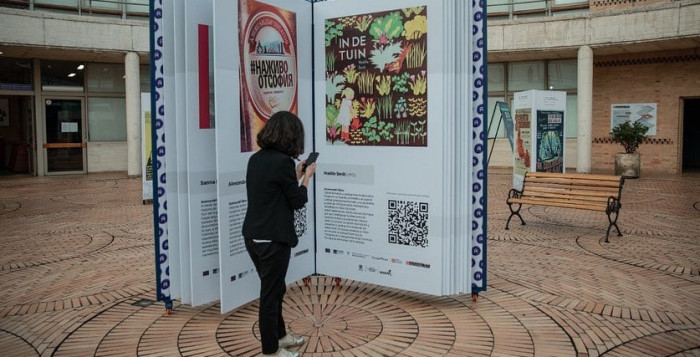
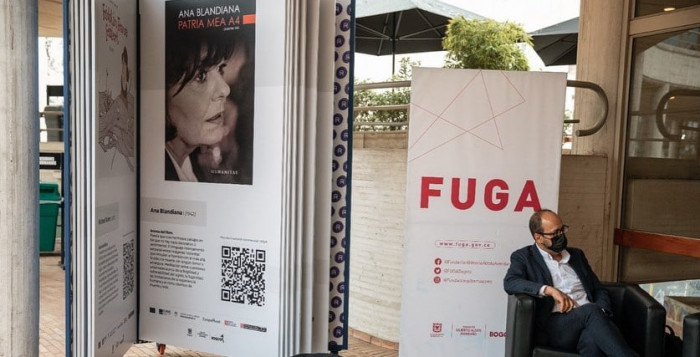
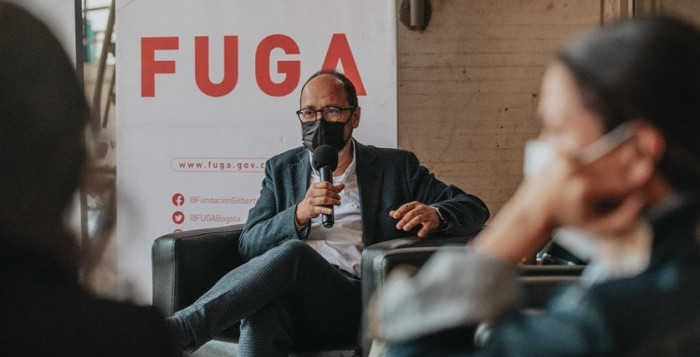
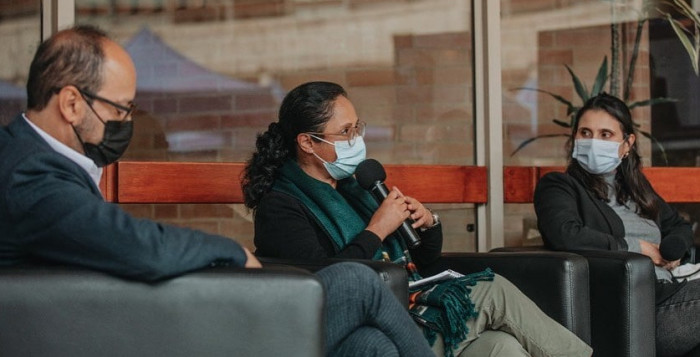
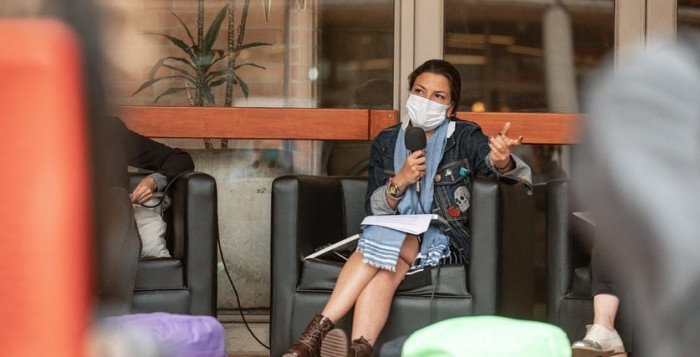
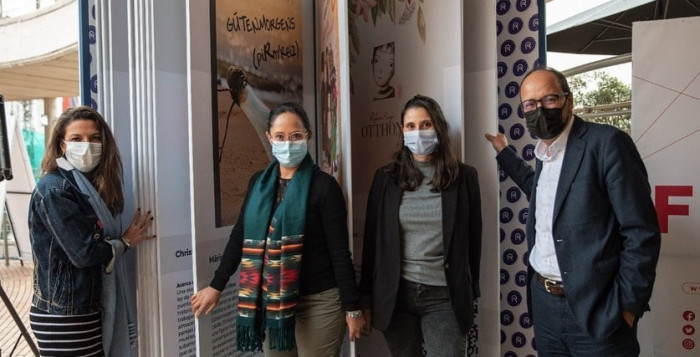

The presentation was followed by a discussion on the future of books, reading and their relationship with societal challenges. In addition to Ambassador of the Republic of Slovenia to Colombia Gorazd Renčelj, the following representatives of local partner institutions to the project joined the debate: Gabriela Roca, Director of the Gabriel García Márquez Cultural Center, Margarita Díaz Casas, Director of the FUGA Foundation (institution for cultural activities in Bogotá), Prof. Dr Felipe Londoño, Dean of the UTADEO Faculty of Design, and Daniela Camacho, Director of the Capital Network of Public Libraries.
The participants discussed the importance of books and reading, especially during the pandemic and in relation to urban development. They also touched on the future of literature, particularly in the framework of digital transformation, and on how the local implementation of Europe Readr communicates about these topics and related issues on the future of living.
In the following weeks, the mobile artistic intervention will also be set up at the campus of the UTADEO Faculty of Design and on several other selected locations in the centre of the Colombian capital.
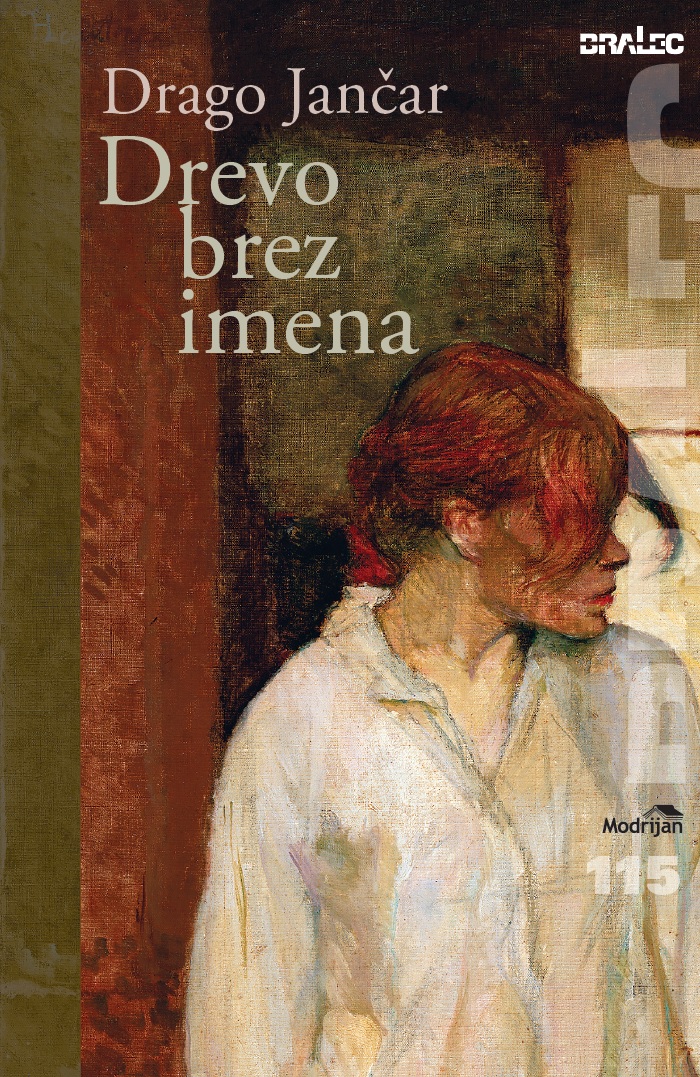
Jančar, one of Slovenia’s foremost writers, skilfully infuses even the most mundane events with foreboding, dread and paranoia.