
In one of the most attractive European cities for activists and artists alike, the Festival will bring together thinkers, creatives and the local population to create a collective European reflection on the sustainable development of the city. Parks will turn into meeting spots to debate a common future.
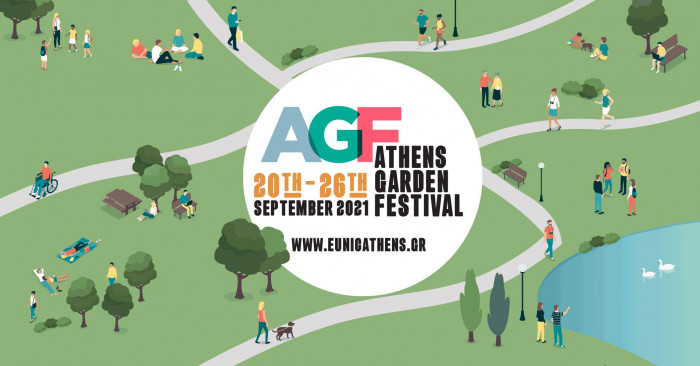
The Athens Garden Festival aims to provide a platform and give a unique opportunity to every citizen to take possession of the city’s gardens and open spaces in order to share views, knowledge and fight stereotypes through art and cultures (outdoors reading culture, dance, music) and the discovery of innovative solutions for local and European issues linked to our future of living (social values and inclusion, digital transition, architecture, sustainability).
Thanks to the collaboration with many local partners and European guests, the Athens Garden Festival will be an occasion to bring together different communities in the city around transgenerational places used as spaces of dialogue, and to ensure skills transfer, intercultural exchanges as well as capacity building through workshops and debates.
All events are free, some require registration. Check the full programme and other conditions on the official Athens Garden Festival webpage and Facebook page.
‘Gast Groeber’s short stories in Every Day Just Hides Another put the focus on characters that increasingly distance themselves from their usual surroundings. The story ‘A Village Idyll’ describes the life of a man who has been ostracized by the villagers ever since he ran over a boy with his car. Groeber smartly shows how the real circumstances of the accident, which have an essential influence on our moral judgement, are no longer taken into consideration at all once the culprit is found. Groeber’s description of the threat to the individual by the Others is also cleverly done: in these stories, it is never clear from the start whether the threat is merely imaginary or very real. Interpersonal relations float between the superficial and a precarious intimacy.
What should be highlighted in Every Day Just Hides Another is the obvious desire to achieve a consistent topical conception that only a few texts don’t follow. Groeber also aims at a decidedly literate, yet always natural language, which is quite an achievement given the limited stock of role models. The attempt for example to construe a character perspective using only impersonal phrases and infinitives that the author makes in ‘The Unbearable Weight of Waiting’ is utterly successful.’