
The Hiwar Art Club employed reading, creative learning and debates to demonstrate the importance of co-creation, international cultural cooperation and the transfer of knowledge through the lens of multidisciplinary art and culture, igniting a change from the people.
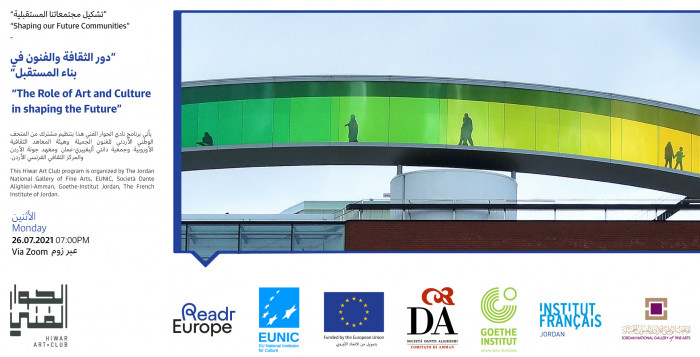
From July to November, the Club organised readings and discussions on shaping our future communities. On 26 July, an open discussion entitled The Role of Art and Culture in Shaping the Future took place online. Based on selected reading materials, it focused on the progressive role of culture and 21st-century artists and how they pursue themes of sustainability, the environment and the future in their work.
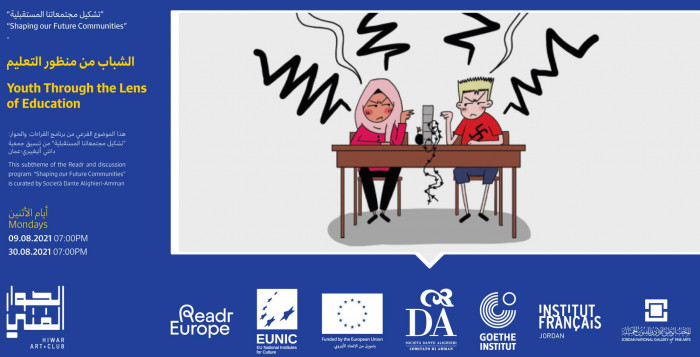
Youth was in focus in August with two events under the title Youth through the Lens of Education. On 9 August, a talk by Hadeel Sharaf, Education Officer of “Terres des Hommes Italy”, and Takoua Ben Mohamed, an Italian illustrator and author of the graphic novel “My Best Friend is a Fascist”, took place and on 30 August an open discussion was held with Hadeel Sharaf. The events addressed the important role education can play in improving our future communities and discussed the main challenges faced in the local education sector.
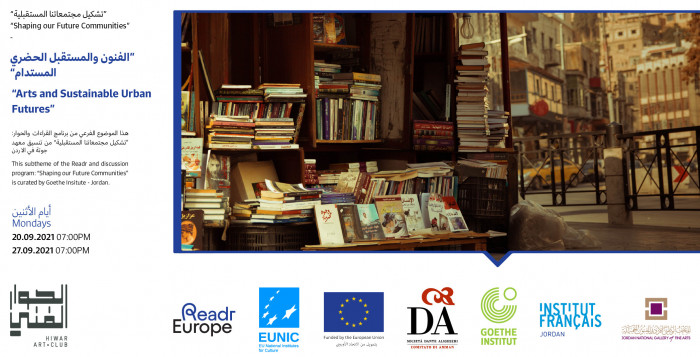
Arts and Sustainable Urban Futures were in focus in September. Two online events on 20 and 27 September with keynote speaker Abdullah Al Bayyari focused on public spaces in Jordan. Practitioners shared their experiences in implementing projects and public art interventions, highlighting the challenges and the creative solutions devised to overcome them. Participants also explored a set of visions and solutions, which could help create a more pluralistic and equal urban future.
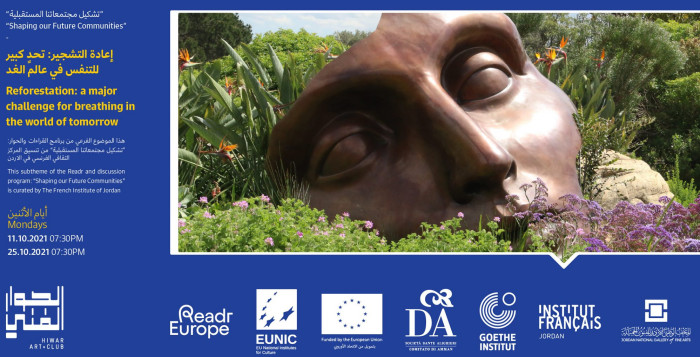
The environment was the main topic in October. Two discussions under the title Reforestation: a major challenge for breathing in the world of tomorrow took place on 11 and 27 October. Their aim was to demonstrate how art and the environment can work together to fight desertification and deforestation for breathing in the world of tomorrow.
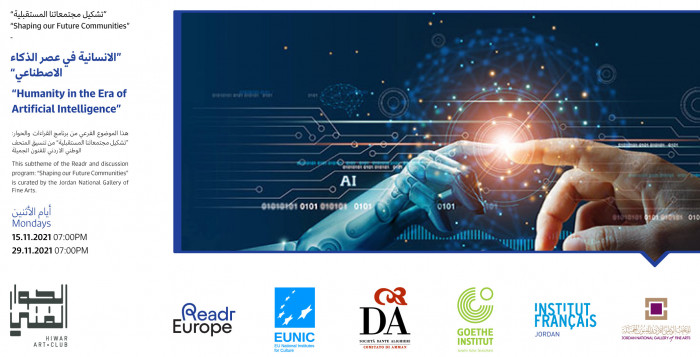
In November, the discussions took on a more philosophical note under the title Humanity in the Era of Artificial Intelligence. With artist and writer in the field of critical theory Batool El Hennawy from Egypt, along with Dr. Saed Khawaldeh, consultant and researcher in Artificial Intelligence & Digital Health at the University of Oxford, we discussed artificial intelligence by reviewing its current and future applications and developments, as well as its impact on our lives. We also explored the role that automation and artificial intelligence play in creating a "post-work" society, while asking whether this will ultimately be beneficial or harmful for the human race.
Šindelka’s writing is truly something to behold, and that’s why the book is worth reading [...] what makes it work are the long passages in which the author describes train stations, flooded cities, greenhouses, and the plants therein [...] the language is crisp and clear and frankly quite beautiful, a tribute to both the author and Nathan Fields, the translator.